VOIDFACE: Boss-Rush Bullet Hell With Fighting-Game Spell Inputs
What Is It?
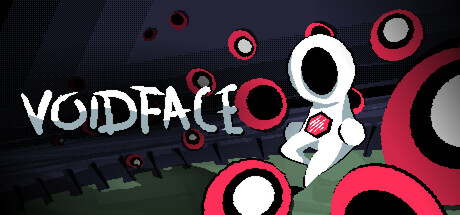
VOIDFACE is a boss-rush bullet hell from Frog Hat Labs, the solo studio of developer abho based in Austin, Texas. Every single encounter in the game is a boss fight — there are no regular enemies, no waves of minions to chew through, no corridors to walk down. You enter an arena, you fight three bosses back-to-back on one life (two on Easy), and you either clear the stage or you don't. That's the entire structure.
The game has 11 stages containing 31 total bosses. Each stage is a self-contained gauntlet of three encounters, and you have to beat all three without dying to clear it. There's a tutorial stage that teaches the basics, and the later stages ramp up significantly in pattern density and speed. Two difficulty modes — Easy (two hits) and Hard (one hit) — cover the full range, and each stage has a "golden time" target for players chasing mastery.
What makes VOIDFACE stand out from the rest of the boss-rush tag on Steam is its spell system. Instead of pressing a single button for a bomb or special attack, you cast spells through directional motion inputs — quarter-circle and half-circle sequences on an analog stick or D-pad, the same inputs you'd use for a hadouken or shoryuken in Street Fighter. The spell roster includes an bullet-erasing blast, a heavy sword swing, a double-shot power-up, a defensive shield, a heal, and a few more that unlock as you progress. Each one has a specific directional input you need to execute accurately while simultaneously dodging dense bullet patterns. That split between spatial awareness for dodging and memorized sequential input for casting is the game's defining tension.
VOIDFACE started as a free game on itch.io called VOIDFACE Legacy, with 27 bosses across nine stages and no spell system at all. Over four years of iteration, abho added the spellcasting, new bosses, improved visuals, an original dynamic soundtrack, and extras like unlockable hats and artwork before bringing it to Steam. The Steam demo — available since January 2025 — covers the early stages, and your progress carries over to the full game. The full version includes 29 Steam Achievements, full controller support, Steam Cloud saves, and runs in about 200 MB of storage.

Key Details
| Developer | Frog Hat Labs (solo dev abho) |
| Publisher | Frog Hat Labs |
| Release date | August 18, 2026 |
| Price | $8.99 (no active discount) |
| Review score | 96% positive (33 reviews) |
| Platforms | PC (Steam, Windows 7+) |
| Bosses | 31 across 11 stages |
| Difficulty modes | Easy (2 lives), Hard (1 life) |
| Achievements | 29 |
What Works
The two-skill design — simultaneous bullet dodging and fighting-game input execution — creates a challenge that doesn't exist anywhere else in the genre. Most bullet hells ask you to move, shoot, and occasionally press a bomb button. VOIDFACE adds a layer of execution on top of that: you need to read a dense bullet pattern, find your dodge path, and then also input a precise directional sequence to cast a spell, all within the same few seconds. When you pull it off — clearing a cluster of incoming projectiles with Erase while threading through the gaps to maintain position — it feels like you're operating on a higher cognitive plane than most shmups require.
The zero-filler structure keeps the game moving. There's no dead time between encounters, no shopping screens, no upgrade trees, no roguelite metaprogression to grind. You die, you restart the stage, you try again. The entire game is 31 boss fights, and each one has handcrafted patterns that you can learn and improve against. Early Steam reviewers have logged 16 and 35 hours within the first day of launch, which tells you the difficulty ceiling is real and the content, while finite, rewards repeated attempts rather than one-and-done clears.
The spell reveal system is smart. You start the game only knowing Erase (down, down on the stick). The other spells — Swing, Shield, Double Shot, Heal, and others — are hidden and get revealed one at a time as you beat stages. This means you're not overwhelmed with inputs from the start; the complexity builds at the same pace as the boss patterns. By the time you're facing late-game encounters that practically require Shield and Heal to survive, you've had enough time to build muscle memory on the earlier spells.
The game runs well on modest hardware and takes up almost no disk space. Minimum specs ask for a dual-core 2.0 GHz processor, 2 GB of RAM, and a dedicated GPU with 512 MB of VRAM. Storage requirement is 200 MB. Controller support is fully implemented and the game is designed around stick input for spellcasting, so a gamepad isn't optional — it's the intended way to play. Auto-fire is available as an option so you can focus your thumb on movement and spells instead of holding a fire button.
What Doesn't
The difficulty is not negotiable. Even Easy mode, which gives you two hits instead of one, has players reporting that they get stuck on early stages. One Steam reviewer who only played the demo said "even easy mode is almost impossible to beat." This is by design — the developer's own launch announcement says "VOIDFACE is HARD" in all caps. The game does not hold your hand, does not scale to your skill level, and does not offer a middle-ground difficulty between Easy and Hard. If you don't enjoy dying repeatedly in bullet hells, this game has nothing for you.
Performance issues have been reported by players on lower-end hardware. One Steam community user with an i3 quad-core and integrated graphics reported significant lag in fullscreen mode, with 0.3–0.5 seconds of input delay on aiming and 0.2–0.3 seconds on movement. Switching to windowed mode and disabling most visual effects helped, but the delay didn't fully disappear. If you're running integrated graphics, the free demo is essential before buying — the game's performance on weak hardware is not where it needs to be.
Camera zoom and slowdown effects during boss phase transitions have caused frustrating deaths. A community member spent nearly four hours on the tutorial and specifically called out the sudden camera shifts and slowdown during boss transformations as "disorienting, leading to quite a few deaths." A friend watching the game had the same reaction. These effects are presumably there for dramatic impact, but in a game where frame-perfect positioning matters, any visual disruption that breaks your spatial awareness is a problem.
The game is narrow in scope by choice. There's no narrative, no exploration, no roguelite progression, no procedural generation, and no modes beyond Easy and Hard. You get 11 stages of handcrafted boss fights, and that's it. For the target audience — people who want to memorize patterns, optimize times, and chase golden clears — that's plenty. For anyone expecting more variety in structure or replay incentives beyond time attacks, the game will feel thin after the first clear. The unlockable hats and artwork are nice but don't add gameplay.
Tips for New Players
Play the demo before you buy
The demo covers the tutorial and the first two INTRO stages — enough to answer two questions: "Can my PC run this?" and "Is this difficulty something I can tolerate?" Demo save data carries over to the full game, so time spent in the demo isn't wasted. The game is cheap, but $8.99 is still $8.99 if it turns out the difficulty or performance puts you off.
Turn on auto-fire immediately
There's an option in the settings that lets you hold the fire trigger once for continuous shooting. In a game where your right thumb needs to be free for spell inputs on the stick, auto-fire is not a convenience — it's practically required. Every thumb second you save from mashing a fire button is a thumb second you can spend positioning for a spell motion.
Turn on auto-retry
There's an auto-retry option in the settings menu (bound to R by default) that instantly restarts the stage on death. In a game where you will die dozens of times per stage, manually navigating restart menus each time adds up fast. One YouTuber playing the game explicitly recommended turning this on, calling it essential because "you're going to die so much, it might as well just automatically restart you."
Learn spell inputs in a safe environment first
Don't try to learn a new spell's input for the first time while a boss is filling the screen with bullets. Go back to a stage you've already cleared, set it to Easy, and practice the input until you can do it from muscle memory without looking at your hands. The spell inputs are short — Erase is just down-down, Swing is up-up — but doing them cleanly under pressure while dodging is a different skill than doing them in a quiet room. Build the muscle memory first, then apply it under fire.
Manage your mana
Spells cost mana, and mana recharges over time. Early on you only have one spell slot so this isn't an issue, but as more spells unlock you'll be tempted to cast liberally. Don't. Save your mana for moments where a spell will actually save your life — clearing a dense pattern you can't dodge, shielding through an attack you can't avoid, or healing when you're one hit from death on Hard mode. Wasting mana on offensive spells when basic shooting would work fine leaves you without options when things get bad.
Start each stage on Hard mode first
The developer and one previewer both recommend trying each stage on Hard first to understand the full pattern, then dropping to Easy to practice your clear. This sounds backward, but the logic holds: Hard mode shows you every attack at full speed, so when you switch to Easy the patterns feel slower and more readable. You learn the real version first instead of building habits on Easy that break when you step up.
Watch for boss weak points
Bosses in VOIDFACE are designed to be dismantled piece-by-piece. Many have specific weak points — a glowing core, orbiting shields you need to destroy first, or body parts you need to target in a specific order. The spider boss, for example, will lay eggs that spawn spiderlings if you don't deal with them quickly. The UFO boss has a gravity pull that drags you in. Learning which part to focus damage on, and when, is often more important than raw dodging skill.
Common Questions
How long does VOIDFACE take to beat?
A first clear of all 11 stages on Easy will take most players somewhere between 5 and 10 hours, depending on prior bullet-hell experience. Players coming from games like Touhou or Enter the Gungeon will adapt faster; players new to the genre should expect the higher end. Hard mode and golden time targets add significant replay value — early launch-day players have already logged 16–35 hours, and those numbers will grow as people chase mastery.
Do I need a controller?
Yes, practically. The spell system is built around directional inputs on an analog stick or D-pad. You can technically play with a keyboard, but executing quarter-circle and half-circle motions on WASD while simultaneously dodging bullets is awkward in ways that a controller doesn't impose. The developer designed the game with gamepad as the primary input method.
How does this compare to other bullet hells?
VOIDFACE strips out the standard shmup structure — no vertical scrolling stages, no regular enemies to farm, no score-chasing multiplier systems (beyond golden times). Every encounter is a boss. The spell-input system is the main differentiator; no other bullet hell on Steam asks you to do fighting-game motions while dodging. If you want a traditional shmup with waves and power-ups, look elsewhere. If you want pure boss fights with an extra execution layer, this is it.
Is there any content between boss fights?
No. Each stage drops you into an arena against three bosses in sequence. There are no filler enemies, no exploration segments, no story cutscenes, and no shopping phases between fights. When one boss dies, the next one starts. The game is pure combat from start to finish.
What do I get for beating stages?
Clearing a stage for the first time unlocks the next stage and usually reveals a new spell in your roster. You also unlock cosmetic rewards — hats your character can wear and artwork pieces in the extras gallery. There are 29 Steam Achievements tied to clearing stages, beating specific bosses, and completing various challenges.
Will there be more content after launch?
The developer hasn't announced specific post-launch plans. Community members have asked about additional stages, new spells, or an endless mode, and the developer's responses suggest they're open to it but nothing is confirmed. The current game is a complete, finite experience — 31 bosses, 11 stages, two difficulty modes, and golden time targets.
Is the itch.io version the same as Steam?
No. The original VOIDFACE Legacy on itch.io has 27 bosses, no spell system, simpler graphics, and is free. The Steam version adds four more bosses (31 total across 11 stages), the entire spellcasting system with fighting-game inputs, improved visuals, a dynamic soundtrack, unlockable cosmetics, and achievements. The Steam version is a substantially different and more complex game.